INFORMS asked us to blog about O.R. and Social Networks.
Once upon a time, O.R. people networked using the mail. In those days, academics would often have a network of people interested in the same branch of O.R., and would circulate drafts of papers by post for comment and criticism. And we networked at conferences, study groups and lectures.
When the OR Society (UK) held its conference in Exeter in 1991, they asked me to chair the event. I invited various speakers from outside the O.R. community to speak at the event. Two were academics. from geography and medicine. Independently they commented that the atmosphere of an O.R. conference was different from the experiences of their disciplines in conferences. They both said that it was much more friendly, and they sensed that O.R. people were less competitive. The networking was both social and sociable.
And then came USENET and the sci.op-research discussion group, which I followed and contributed to over the next ten years. It made for an international gathering, though there were the regular contributors who had a word to say about everything. There were those who thought that they could get help with student homework free of charge, and every so often we had contributions who thought that "op" meant "optical". On balance, I think that the overall cost-benefit of using the discussion group was limited. I could have done more usefully with my time than follow it. But there were days when it was valuable.
And now there are discussions of a kind on LinkedIn and Facebook relating to O.R.; very few people are contributing ... even to the group that hates linear programming.
As an example of a concept used in O.R., both of these recognise that their users form a graph, with each friendship represented by an edge between the nodes of people. So there are suggestions of people that you may know who are two edges away from you. I laugh at some of these. I am "friends" with my wife's sister and her children. But I don't know their circle of friends in the place where they live, even though Facebook tells me that we have many mutual friends. Facebook has an app which plots a friend graph, which in my case is reasonably small. It has several cliques. But I would know that without the app.
So, for O.R., following the new social networks are probably not cost-effective. All in all, I hope that O.R. people will continue to network at conferences, study groups and lectures, and that they will always be both social and sociable events.
Showing posts with label Conference. Show all posts
Showing posts with label Conference. Show all posts
Friday, 29 July 2011

Wednesday, 21 July 2010
EURO XXIV (EURO24) in Lisbon, part 2
I realise that my first blog about the conference was a little negative. Let's look at the good things about conferences.
I met a great number of people, renewing old friendships, and in a few cases, starting new ones. Conferences are great for this, especially if most of the time, you are beavering away in one place, not meeting like-minded people. I have several friends who I have only met at conferences. It is even a good place to see friends from other parts of the U.K.. Of course, one shouldn't really admit that one goes to conferences to meet people; as far as our paymasters are concerned, we go to present our research work and to listen to other people present their research work.
That's the theory. In practice, many of the presenters are there to "Tick the box" of conference presentation. There is not enough time to discuss the material in depth in the sessions. And people work in tight little niches. So the chances are that you won't get many questions that stir new ideas.
But it was good to be part of this conference. Jim Cochran gave an excellent plenary session about teaching O.R. and making it interesting. The best attended session that I went to was on financial optimization and had some good papers. The worst for attendance was on sustainable development ("we are working on sustainable development for developing countries. To calibrate our model, we are using Luxembourg.") A good number turned up to a session on graphs and networks, but fewer were interested in water systems. And in all these, there were interesting models being discussed.
The conference organisers had excellent catering, apart from the reception. Endless coffee, chilled bottled water, fruit juice or squash, and biscuits to eat. Lunch was one of the easiest conference lunches I have known -- huge buffet tables, so very little queueing.
Springer had a demonstration of their touch-screen library, with 200 books available. All could be read and re-read on screen, though I wonder how long before their text books are on an electronic book?
The sun shone; Lisbon is beautiful, though the university campus could do with more effort clearing rubbish and repairing pavements. I wondered why there were so many police on the campus.
I met a great number of people, renewing old friendships, and in a few cases, starting new ones. Conferences are great for this, especially if most of the time, you are beavering away in one place, not meeting like-minded people. I have several friends who I have only met at conferences. It is even a good place to see friends from other parts of the U.K.. Of course, one shouldn't really admit that one goes to conferences to meet people; as far as our paymasters are concerned, we go to present our research work and to listen to other people present their research work.
That's the theory. In practice, many of the presenters are there to "Tick the box" of conference presentation. There is not enough time to discuss the material in depth in the sessions. And people work in tight little niches. So the chances are that you won't get many questions that stir new ideas.
But it was good to be part of this conference. Jim Cochran gave an excellent plenary session about teaching O.R. and making it interesting. The best attended session that I went to was on financial optimization and had some good papers. The worst for attendance was on sustainable development ("we are working on sustainable development for developing countries. To calibrate our model, we are using Luxembourg.") A good number turned up to a session on graphs and networks, but fewer were interested in water systems. And in all these, there were interesting models being discussed.
The conference organisers had excellent catering, apart from the reception. Endless coffee, chilled bottled water, fruit juice or squash, and biscuits to eat. Lunch was one of the easiest conference lunches I have known -- huge buffet tables, so very little queueing.
Springer had a demonstration of their touch-screen library, with 200 books available. All could be read and re-read on screen, though I wonder how long before their text books are on an electronic book?
The sun shone; Lisbon is beautiful, though the university campus could do with more effort clearing rubbish and repairing pavements. I wondered why there were so many police on the campus.
Friday, 16 July 2010
EURO XXIV (EURO24) in Lisbon
I spent some time in Lisbon this week for the 24th EURO conference. EURO is the association of national OR societies from Europe (plus those in Israel and Africa). It was based on the university campus, running from the evening of Sunday 11th July and ending late on Wednesday 14th July. For various reasons I couldn't stay for the last day.
As usual, I have come away from the conference with mixed feelings. It was a huge event, with about 2,700 delegates from the European nations and beyond. Many of them were research students presenting their work in a forum related to Operational Research.
As usual, when things went wrong, I stopped to wonder how things could be improved. So here are some general suggestions for any conference ....
1) Learn from the mistakes of other people. Some things go wrong every time, in different details. One of the disadvantages of EURO is that there is insufficient corporate memory. Each conference is arranged without much having beenlearnt from earlier ones.
2) Consider all the bottlenecks in the queues and points of service associated with a conference. Delegates need service with their registration and need to be able to use the conference website to answer a range of questions quickly and without having to go thorugh too many hoops. So the website should be simple to use and comprehensive. Registration on site is the first queue most people encounter and it should be as simple and quick as possible, which means that efforts should be made in advance to make service times as short as possible OR to have lots of people to give service. To complete my registration I needed to join three queues (for my badge, for my confernece bag and papers, for my banquet ticket). If I had gone on the excursion, there would have been another queue. At other events, these queues could be replaced by one. Similarly, catering queues need to be minimised. It doesn't take advanced use of queue theory to work out that 2,000 people gathering for a buffet meal need a lot of service points. 100 servers perhaps?
3) Help the delegates to find their way around. The home team knows its way around the buildings, but everyone from elsewhere doesn't so they need signs that can be found easily and read quickly.
4) Make sure that the rooms are suitable for the meetings. I spent an afternoon in a room directly underneath the waste pipes of the ladies' toilets, so there were regular sounds of flushing. Another session was in a warm room, and the window opened in such a way that the screen was obscured by the frame.
5) For presenters. Do think about what you should put in your presentation. Nobody will take in your equations and constraints with a hundred variables -- my record was seven different subscripts in the equations on one screen. And large tables are too much to take in during a fifteen minute presentation. There is only time for two or three main points, and then these need to be put simply and clearly.
6) Also for presenters. Do rehearse the presentation, and do it with an audience who will be honest with you. Because the presenters come from all over the place, some of them are less fluent in English than the Brits and other English-speaking countries. Going through the presentation several times before will deal with nervousness, and keep the talk to its time slot.
7) For session chairs. Keep strictly to the timetable and follow your instructions carefully. At EURO the majority of sessions lasted 80 minutes with four papers. They were supposed to keep to 15 minutes presentation, and 5 minutes discussion. Chairs were to keep an eye on the time and stop the speaker. That allowed delegates to move between sessions at those 20 minute intervals. And if presenters didn't show up, then there should be a gap, because there could be people switching sessions to hear the talks at their scheduled times. Did this happen? No ... talks over-ran, chairs failed to stop them, and if there were no-shows, they just went on with the next paper.
8) For everyone, especially those with major responsibilities; there is a time and place for everything, and some plenary sessions are not the times for unnecessary announcements and speeches. For many EURO delegates, a lasting memory of the conference will be the description of how to adjust the conference souvenir bag that was given after the conference banquet!
As usual, I have come away from the conference with mixed feelings. It was a huge event, with about 2,700 delegates from the European nations and beyond. Many of them were research students presenting their work in a forum related to Operational Research.
As usual, when things went wrong, I stopped to wonder how things could be improved. So here are some general suggestions for any conference ....
1) Learn from the mistakes of other people. Some things go wrong every time, in different details. One of the disadvantages of EURO is that there is insufficient corporate memory. Each conference is arranged without much having beenlearnt from earlier ones.
2) Consider all the bottlenecks in the queues and points of service associated with a conference. Delegates need service with their registration and need to be able to use the conference website to answer a range of questions quickly and without having to go thorugh too many hoops. So the website should be simple to use and comprehensive. Registration on site is the first queue most people encounter and it should be as simple and quick as possible, which means that efforts should be made in advance to make service times as short as possible OR to have lots of people to give service. To complete my registration I needed to join three queues (for my badge, for my confernece bag and papers, for my banquet ticket). If I had gone on the excursion, there would have been another queue. At other events, these queues could be replaced by one. Similarly, catering queues need to be minimised. It doesn't take advanced use of queue theory to work out that 2,000 people gathering for a buffet meal need a lot of service points. 100 servers perhaps?
3) Help the delegates to find their way around. The home team knows its way around the buildings, but everyone from elsewhere doesn't so they need signs that can be found easily and read quickly.
4) Make sure that the rooms are suitable for the meetings. I spent an afternoon in a room directly underneath the waste pipes of the ladies' toilets, so there were regular sounds of flushing. Another session was in a warm room, and the window opened in such a way that the screen was obscured by the frame.
5) For presenters. Do think about what you should put in your presentation. Nobody will take in your equations and constraints with a hundred variables -- my record was seven different subscripts in the equations on one screen. And large tables are too much to take in during a fifteen minute presentation. There is only time for two or three main points, and then these need to be put simply and clearly.
6) Also for presenters. Do rehearse the presentation, and do it with an audience who will be honest with you. Because the presenters come from all over the place, some of them are less fluent in English than the Brits and other English-speaking countries. Going through the presentation several times before will deal with nervousness, and keep the talk to its time slot.
7) For session chairs. Keep strictly to the timetable and follow your instructions carefully. At EURO the majority of sessions lasted 80 minutes with four papers. They were supposed to keep to 15 minutes presentation, and 5 minutes discussion. Chairs were to keep an eye on the time and stop the speaker. That allowed delegates to move between sessions at those 20 minute intervals. And if presenters didn't show up, then there should be a gap, because there could be people switching sessions to hear the talks at their scheduled times. Did this happen? No ... talks over-ran, chairs failed to stop them, and if there were no-shows, they just went on with the next paper.
8) For everyone, especially those with major responsibilities; there is a time and place for everything, and some plenary sessions are not the times for unnecessary announcements and speeches. For many EURO delegates, a lasting memory of the conference will be the description of how to adjust the conference souvenir bag that was given after the conference banquet!
Monday, 3 November 2008
Placing a value on an experience
In my previous post I referred to the IFORS Newsletter and the account of the IFORS conference in Sandton, South Africa. Among the pictures, there is one of several people stroking a cheetah in a wildlife rescue centre, with the note that there was a fixed charge per photograph. The four people shared the expense. This raises the question -- which is OR related -- of what would be a fair price for that "experience". Someone has had to make the decision and fix a price, presumably to try and maximise the revenue. Costs must be more or less fixed, and extra stroking won't wear out the cheetah. So someone judges what the market will bear. How?
It contrasts with a visit that I paid to a similar rescue centre, where stroking selected animals was free as part of the overall "experience". Another model of costing?
It contrasts with a visit that I paid to a similar rescue centre, where stroking selected animals was free as part of the overall "experience". Another model of costing?
More about IFORS 2008 conference
The IFORS Newsletter dated September 2008 has recently arrived on the web (HERE).
It is a colourful edition, with several accounts of the 2008 conference at Sandton in South Africa. My friend, former colleague, and predecessor as editor of IAOR (International Abstracts in Operations Research) has printed his diary and thoughts about the event. That is one of the worthwhile articles in the newsletter, even though Graham is described as one of the "stall warts" of IFORS, and his account is a "dairy account". Spell checkers are wonder full!
It is a colourful edition, with several accounts of the 2008 conference at Sandton in South Africa. My friend, former colleague, and predecessor as editor of IAOR (International Abstracts in Operations Research) has printed his diary and thoughts about the event. That is one of the worthwhile articles in the newsletter, even though Graham is described as one of the "stall warts" of IFORS, and his account is a "dairy account". Spell checkers are wonder full!
Monday, 1 September 2008
My week in O.R. at the IFORS 2008 conference
The newsletter of the U.K. O.R. Society includes a feature "My week in O.R." or "My month in O.R.". In the issue for September 2008, my contribution about the IFORS conference was included, as follows:
It’s 9:20am on Sunday morning, and I’m going into church. Together with my wife Tina I am in Sandton, South Africa for the triennial IFORS (International Federation of OR Societies) conference, which starts today. Sandton is a strange place – a suburb of Johannesburg – with a strange, artificial air to it. We arrived yesterday and checked into one of the conference hotels. It’s four-star, international, impersonal and totally devoid of character. We are noticing the difference (it is almost culture shock) after a week and a half of holiday. The first week was a safari in an overland truck, staying in game lodges and backpackers’ hostels, in a group from five countries and speaking three languages. The beds were more comfortable than our four-star accommodation here, and the staff of lodges and hostels were friendlier.
Amidst the hotels, offices and shopping malls of Sandton, there is one convenient church; I’ve tried to find somewhere to worship at most of the IFORS conferences that I have been to, with interesting results. Here Tina and I, with conference friends, have arrived to find the church empty except for one man fixing the P.A. “Everyone else will be along shortly” he tells us; sure enough, at 9:28, the church fills up ready for the 9:30 service. We are welcomed, and the service proceeds, with more and more people drifting in over the next half-hour. The sermon – longer than in most U.K. churches, has an O.R. link; some of the New Testament parables stop with a cliff-hanger and seem incomplete; isn’t this a bit like some reports of O.R. work, which leave the reader asking “What happened next?”
My afternoon is spent talking about the International Abstracts in O.R. (IAOR), which I edit, and whose sales provide IFORS with a steady income stream. The conference is the time when we are launching an updated version of the electronic IAOR, so the leaders of IFORS are particularly interested in the report. Then I get involved with a meeting for editorial advisers of another journal, which is filled with statistics about submission rates and publication delays.
IFORS conferences follow a regular pattern: reception on Sunday, two days of papers, one day-long excursion or choice of excursions, and two more days of papers. The evening’s reception has been scheduled for two and a half hours, and by the time Tina and I get there, people are already drifting away. O.R. observation: receptions should be shorter, to allow people to meet one another; what is the optimum length?
Being in Africa, the conference opens with drumming and dancing, followed by a welcome from the minister of science and a plenary speech by Clem Sunter about Scenario Planning “The world and South Africa in the 2010s”. Some of his remarks about planning are clearly particularly pertinent for the minister. Then there are the usual parallel sessions that make up all conferences. I opt for the session on developing countries, to hear the seven papers that have been shortlisted as candidates for an IFORS prize. Like many conference sessions, this one is a curate’s egg.
I skipped out of the sessions for part of Tuesday to accompany my “accompanying person” on the trip to a glass factory – which was ninety percent disastrous. The most interesting bit was meeting the team who had created the key-rings in the conference packs. Made of glass beads, threaded onto wire, each is different. Our guide explained how the random patterns were produced, using a device worthy of Heath Robinson; all the parts used are recycled materials. The following day we have opted for a trip to a diamond mine. What struck us most forcefully was the ordinariness of the site, apart from the intense security. We didn’t lose touch with O.R.; the mine has monthly performance targets, derived from a forecasting model. Earlier this year, the target was missed because of power cuts; loss of 20% of the power meant a loss of 50% in production.
Sandton is a strange place for a conference. Because of the security, Tina can’t simply go off for a walk, and she spends a good deal of time reading in the hotel garden. There is a wide choice of shopping malls, one linked to our hotel by an underground passage, another attached to the convention centre. Even the winter sales in the shops fail to attract her for very long.
Thursday – another day of parallel sessions. In the evening, the gala conference dinner, enlivened (if that is the right word) by a parade of representatives of the 48 national societies that are members of IFORS, ordered according to when each society joined the federation. There is more dancing, loud jazz music, queues for the buffet, and very few speeches. Years ago, I read some words of Hermann Bondi: “Little children, from the age of three upwards, ask the question ‘Why?’ The aim of education is to stop such questions. Education has its failures. They are called scientists.” The dinner is a time for me to ask “Why?” and the subsequent question, for me (as an O.R. scientist), is “How?” “Why is the service so poor? How could it be improved?” These two questions have never been far from my mind all week. “Why is the design of the convention centre where the conference is being held so weird and inefficient? How …?” “Why is the hotel service indifferent? How …?” My mentors in my distant O.R. youth emphasised the importance of time spent on site, experiencing the problem that was being studied; managers in service industries often should learn the same way, experiencing the service as a customer and seeing how it could be improved. The hotel has a sort of feedback loop of control, with customer response forms; will any of my comments be dealt with if I were to come back next year?
And then comes Friday, and the closing plenary session. Very interesting, but the presentation is very poor, and the speaker could have said in 20 minutes what took 45. Those delegates who are still around start to disperse, some back home, others to holiday in South Africa. Has it been a successful conference? Yes, I have met a lot of people, some old friends, some new ones. Have there been any outstanding sessions? Not for me, sadly.
Back in the office in Exeter the following Monday, there are my emails to be dealt with, and a meeting with my research student, M, and her project sponsors. She has been trying to make sense of a large mass of historic data; we spend time trying to get something useful out of it for the sponsor. I encourage M to “play with the data” to try and find useful information, though I remind her that this is not an expression to use in our presentations. The meeting with sponsor goes well, as we are joined by one of the U.K.’s experts in the type of data we are looking at, and he has excellent communication skills as he talks about the project and its context. He doesn’t mind when I ask those two questions, over and over “Why?” and “How?”. In terms of information gained, the hour with him has given me as much as the whole conference.
It’s 9:20am on Sunday morning, and I’m going into church. Together with my wife Tina I am in Sandton, South Africa for the triennial IFORS (International Federation of OR Societies) conference, which starts today. Sandton is a strange place – a suburb of Johannesburg – with a strange, artificial air to it. We arrived yesterday and checked into one of the conference hotels. It’s four-star, international, impersonal and totally devoid of character. We are noticing the difference (it is almost culture shock) after a week and a half of holiday. The first week was a safari in an overland truck, staying in game lodges and backpackers’ hostels, in a group from five countries and speaking three languages. The beds were more comfortable than our four-star accommodation here, and the staff of lodges and hostels were friendlier.
Amidst the hotels, offices and shopping malls of Sandton, there is one convenient church; I’ve tried to find somewhere to worship at most of the IFORS conferences that I have been to, with interesting results. Here Tina and I, with conference friends, have arrived to find the church empty except for one man fixing the P.A. “Everyone else will be along shortly” he tells us; sure enough, at 9:28, the church fills up ready for the 9:30 service. We are welcomed, and the service proceeds, with more and more people drifting in over the next half-hour. The sermon – longer than in most U.K. churches, has an O.R. link; some of the New Testament parables stop with a cliff-hanger and seem incomplete; isn’t this a bit like some reports of O.R. work, which leave the reader asking “What happened next?”
My afternoon is spent talking about the International Abstracts in O.R. (IAOR), which I edit, and whose sales provide IFORS with a steady income stream. The conference is the time when we are launching an updated version of the electronic IAOR, so the leaders of IFORS are particularly interested in the report. Then I get involved with a meeting for editorial advisers of another journal, which is filled with statistics about submission rates and publication delays.
IFORS conferences follow a regular pattern: reception on Sunday, two days of papers, one day-long excursion or choice of excursions, and two more days of papers. The evening’s reception has been scheduled for two and a half hours, and by the time Tina and I get there, people are already drifting away. O.R. observation: receptions should be shorter, to allow people to meet one another; what is the optimum length?
Being in Africa, the conference opens with drumming and dancing, followed by a welcome from the minister of science and a plenary speech by Clem Sunter about Scenario Planning “The world and South Africa in the 2010s”. Some of his remarks about planning are clearly particularly pertinent for the minister. Then there are the usual parallel sessions that make up all conferences. I opt for the session on developing countries, to hear the seven papers that have been shortlisted as candidates for an IFORS prize. Like many conference sessions, this one is a curate’s egg.
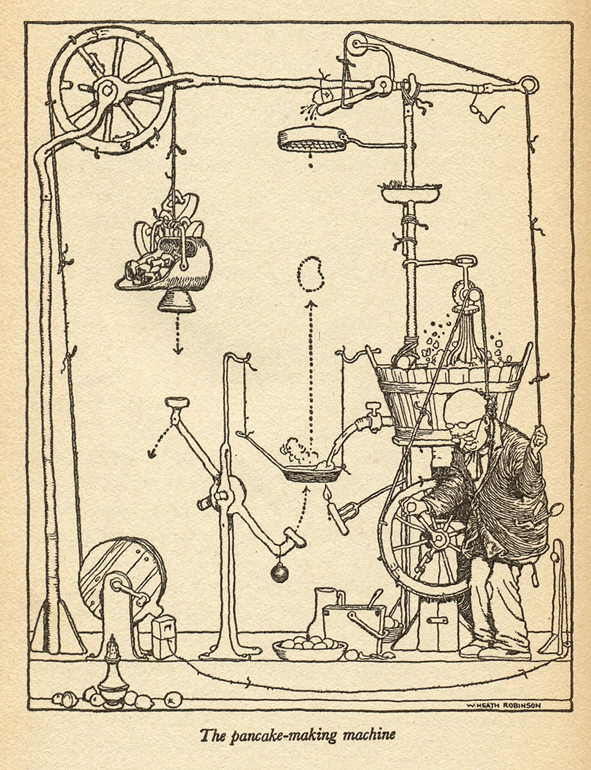
I skipped out of the sessions for part of Tuesday to accompany my “accompanying person” on the trip to a glass factory – which was ninety percent disastrous. The most interesting bit was meeting the team who had created the key-rings in the conference packs. Made of glass beads, threaded onto wire, each is different. Our guide explained how the random patterns were produced, using a device worthy of Heath Robinson; all the parts used are recycled materials. The following day we have opted for a trip to a diamond mine. What struck us most forcefully was the ordinariness of the site, apart from the intense security. We didn’t lose touch with O.R.; the mine has monthly performance targets, derived from a forecasting model. Earlier this year, the target was missed because of power cuts; loss of 20% of the power meant a loss of 50% in production.
Sandton is a strange place for a conference. Because of the security, Tina can’t simply go off for a walk, and she spends a good deal of time reading in the hotel garden. There is a wide choice of shopping malls, one linked to our hotel by an underground passage, another attached to the convention centre. Even the winter sales in the shops fail to attract her for very long.
Thursday – another day of parallel sessions. In the evening, the gala conference dinner, enlivened (if that is the right word) by a parade of representatives of the 48 national societies that are members of IFORS, ordered according to when each society joined the federation. There is more dancing, loud jazz music, queues for the buffet, and very few speeches. Years ago, I read some words of Hermann Bondi: “Little children, from the age of three upwards, ask the question ‘Why?’ The aim of education is to stop such questions. Education has its failures. They are called scientists.” The dinner is a time for me to ask “Why?” and the subsequent question, for me (as an O.R. scientist), is “How?” “Why is the service so poor? How could it be improved?” These two questions have never been far from my mind all week. “Why is the design of the convention centre where the conference is being held so weird and inefficient? How …?” “Why is the hotel service indifferent? How …?” My mentors in my distant O.R. youth emphasised the importance of time spent on site, experiencing the problem that was being studied; managers in service industries often should learn the same way, experiencing the service as a customer and seeing how it could be improved. The hotel has a sort of feedback loop of control, with customer response forms; will any of my comments be dealt with if I were to come back next year?
And then comes Friday, and the closing plenary session. Very interesting, but the presentation is very poor, and the speaker could have said in 20 minutes what took 45. Those delegates who are still around start to disperse, some back home, others to holiday in South Africa. Has it been a successful conference? Yes, I have met a lot of people, some old friends, some new ones. Have there been any outstanding sessions? Not for me, sadly.
Back in the office in Exeter the following Monday, there are my emails to be dealt with, and a meeting with my research student, M, and her project sponsors. She has been trying to make sense of a large mass of historic data; we spend time trying to get something useful out of it for the sponsor. I encourage M to “play with the data” to try and find useful information, though I remind her that this is not an expression to use in our presentations. The meeting with sponsor goes well, as we are joined by one of the U.K.’s experts in the type of data we are looking at, and he has excellent communication skills as he talks about the project and its context. He doesn’t mind when I ask those two questions, over and over “Why?” and “How?”. In terms of information gained, the hour with him has given me as much as the whole conference.
Subscribe to:
Posts (Atom)