This year, Tina and I are reading the Bible together using a Chronological Bible, one which attempts to place the whole of the Old and New Testaments in their chronological order. Reading the whole Bible in one year is a challenge -- there are about four or five pages to read each day, and we read them aloud together after breakfast, before our family prayers.
Today we reached the account of the Children of Israel in Egypt, and Pharaoh's punishment that their slavery be made harder. They should continue making bricks for him, but they had to find their own straw (to bind the clay together). And, the word of God continues, this made their work much, much harder and their productivity fell.
It struck me that here is one of the earliest recorded instances of a supply chain and how bad management made it go wrong. Up till then, there was a supply chain of Egyptians providing straw for the Hebrews making bricks. Pharaoh's orders broke that. And it went wrong. The Bible tells the story from the production end. What happened, one wonders, about the upstream end? What happened to those whose livelihood had been based on supplying straw?
Amazingly, there are many hits when you Google with the keywords "supply chain" + exodus + straw, and one which comes up high is a Christian sermon about modern slavery ... not quite what I was thinking about, but fascinating that someone else has linked the ideas in a church. Here is that link.
Friday, 23 January 2009

The Italian Job -- a solution
The British papers this week are finding space for a few stories other than the inauguration of Barack Obama and the current credit crunch. One such is the outcome of a competition to solve the forty-year old problem of the end of the film, The Italian Job. The competition was organised by the British Royal Society of Chemistry (why not a mathematical society?). It is good to see mathematical modelling, problem solving and decision making in the news media. So here is the story, courtesy of Britain's Daily Telegraph.
===
===And for those who like puns ...
"Keep singing The Self Preservation Society," he tells the gang. The chorus starts up again until they all get frogs in their throats. The frogs start to jump up and down, which rocks the bus.
===
As cliffhanger endings go, there are few more famous than that of The Italian Job. With their coach dangling precariously over an Alpine ravine, a gang of plucky British robbers – led by Michael Caine's Charlie Croker – face the choice of saving themselves or risking all to retrieve the stash of gold they have stolen from Turin. However, each move they make towards the rear of the coach to reach their haul results in the vehicle inching further over the abyss.
The film ends with the famous words from Croker: "Hang on a minute, lads – I've got a great idea." But what was the idea – and would it have worked?
=== The winning solution -- for which the prize is a holiday in Turin, but no gold.
===
===And for those who like puns ...
"Keep singing The Self Preservation Society," he tells the gang. The chorus starts up again until they all get frogs in their throats. The frogs start to jump up and down, which rocks the bus.
They use the rocks to weigh the end of the bus. "Keep singing, lads."
They sing louder, but now the frogs have gone, their throats get sore. They use the saw to cut the gold bars in half. Two halves make a whole. They pass the gold out through the hole, and jump out.
Still singing, they've now all gone hoarse. They load the gold on to the horses and ride off into the sunset.
===
Tuesday, 20 January 2009
The paradox of optimal location
Yesterday I was talking with a former student, whose company provides statistical advice to clients in the service industry. He mentioned an interesting paradox about optimal location, in this case of ambulances. The UK government has various standards or targets to be achieved by public sector bodies, and one of these is about how quickly ambulances can reach an emergency. It's of the form: "In X% of calls, the ambulance must reach the emergency within Y minutes".
He said that in urban areas, it is relatively easy to deploy vehicles to achieve this, because of the short distances involved. And it is also reasonably easy in regions where there are several medium to large towns and cities and a scattered rural population, because the response to the cities dominates the statistics. But the targets are hard to achieve where there are many small to medium sized towns, none of which have sufficient demand to require a vehicle of their own. Then the solution leads to an excess of vehicles.
You can test this for yourself. Suppose that the district is an equilateral triangle, and the demand is such that one vehicle is needed. If the population is spread uniformly across it, then you place your vehicle at the centre of the triangle. If the population is concentrated and divided equally at the three corners, then the best place would still be the centre, but nobody lives there, and so the vehicle should be located at one of the corners. But that means that in two cases out of three, the vehicle must travel to one of the other settlements, and potentially violate the service standard.
I haven't seen this paradox mentioned anywhere in the literature, so you may have read it here first!
He said that in urban areas, it is relatively easy to deploy vehicles to achieve this, because of the short distances involved. And it is also reasonably easy in regions where there are several medium to large towns and cities and a scattered rural population, because the response to the cities dominates the statistics. But the targets are hard to achieve where there are many small to medium sized towns, none of which have sufficient demand to require a vehicle of their own. Then the solution leads to an excess of vehicles.
You can test this for yourself. Suppose that the district is an equilateral triangle, and the demand is such that one vehicle is needed. If the population is spread uniformly across it, then you place your vehicle at the centre of the triangle. If the population is concentrated and divided equally at the three corners, then the best place would still be the centre, but nobody lives there, and so the vehicle should be located at one of the corners. But that means that in two cases out of three, the vehicle must travel to one of the other settlements, and potentially violate the service standard.
I haven't seen this paradox mentioned anywhere in the literature, so you may have read it here first!
Monday, 19 January 2009
Marketing Crisps and Operational Research
Having mentioned crisps, my mind wandered to a recent news story about marketing with an O.R. twist. The UK crisp brand Walkers called on consumers to come up with new ideas for flavours of crisps, with the slogan "Do us a flavour". Six were identified as potentially usable: chilli and chocolate, onion bhaji, Cajun squirrel, fish and chips, crispy duck and hoi sin, and builder's breakfast. There is a public vote to determine the winning flavour which will then remain on sale.
The competition has generated a considerable amount of public interest. Walkers had originally expected about 250,000 entries into the competition, however, it actually received about 1.2m flavour suggestions.
And there is the O.R. twist. Who made the forecast? Has anyone stood up, put their hand on their heart, and admitted "Our forecast model was wrong. We were 80% below."? In the circumstances, I suspect that the forecast was more of a guess than a mathematical model, and the success, both in consumer response and free publicity, will mean that the forecasters will live to forecast for another campaign.
Marketing and Operational Research
My impressions are that in the United Kingdom, surprisingly few O.R. scientists have published papers relating to marketing. The U.S. O.R. society, INFORMS, publishes a journal devoted to quantitative marketing, but there is no comparable interest in the U.K.. Over the years, I have had one or two encounters with projects relating to some aspect of marketing, but have never got a sense that marketing departments use O.R. advice very much. Some of the projects have started with the adage "Half the money spent on advertising is wasted -- but nobody knows which half; if you knew which half, you would make a fortune."
In my postgraduate course we came across a problem which I have never seen written up, perhaps because the problem was trying to build a model to explain some anomalous data and the parameters would have been a commercial secret. So here, nearly forty years after it happened, is a summary.
For many years, the dominant company in the U.K. market for potato crisps was "Smith's". They held over half the market. Then a new bran d was launched, called Golden Wonder. Over the subsequent few months, surveys were carried out to try to measure brand awareness. The problem was that the percentage answering the question "What was the brand of crisps that you last bought?" with "GW" was far lower than the percentage market share for GW. Why?
The answer was inertia and lack of awareness of the brand. Purchasers would ask for a "packet of crisps" and since most shops (and especially bars) only stocked one brand of an item that occupied a lot of storage space, the purchasers accepted what they were given and did not associate their purchase with a brand -- and Smith's had been the leading brand for so long that the association was "Smithscrisps" as one word.
So, as students, we were asked to re-work what the consultants had done, and build a model to link the growth over time of the sales and the growth over time of the awareness. It taught us about building and fitting nonlinear models, and a little about the vagaries of our fellow humans. But it could never have been written up as a paper!
In my postgraduate course we came across a problem which I have never seen written up, perhaps because the problem was trying to build a model to explain some anomalous data and the parameters would have been a commercial secret. So here, nearly forty years after it happened, is a summary.
For many years, the dominant company in the U.K. market for potato crisps was "Smith's". They held over half the market. Then a new bran
d was launched, called Golden Wonder. Over the subsequent few months, surveys were carried out to try to measure brand awareness. The problem was that the percentage answering the question "What was the brand of crisps that you last bought?" with "GW" was far lower than the percentage market share for GW. Why? The answer was inertia and lack of awareness of the brand. Purchasers would ask for a "packet of crisps" and since most shops (and especially bars) only stocked one brand of an item that occupied a lot of storage space, the purchasers accepted what they were given and did not associate their purchase with a brand -- and Smith's had been the leading brand for so long that the association was "Smithscrisps" as one word.
So, as students, we were asked to re-work what the consultants had done, and build a model to link the growth over time of the sales and the growth over time of the awareness. It taught us about building and fitting nonlinear models, and a little about the vagaries of our fellow humans. But it could never have been written up as a paper!
Wednesday, 14 January 2009
The psychology of implementation of O.R.

It has been generally acknowledged in the O.R. that I have studied that implementing O.R. needs to recognise the psychology of the eventual user. There are numerous anecdotes and O.R. legends about this. The problem of elevators in the New York skyscraper is one of the oldest.
Office workers complained about the time they had to wait for elevators, so an O.R. team was asked to try and find an appropriate solution.
Various models were built in the investigation. These considered having more elevators, faster elevators, elevators that only stopped at particular floors. All were deemed insufficient.
Then the psychologist on the team proposed that there be full-length mirrors in the lobbies between the doors of the elevators. His argument was that these mirrors would reduce the perceived time of waiting; some people could arrange their clothing and check their hair; others could surreptitiously watch their fellow workers in the mirror. (The original story was sexist; this is the PC version.)
Result: no more complaints. The solution cost very little.
The same solution approach explains why you have magazines in waiting rooms, and automated advertising screens in bank and other queues. (Does anyone know of an airport where the queues are entertained by such screens? In those that I have visited, the queues have to watch endless reminders about what cannot be taken through security, or how to prepare for security.) And it also partly explains the popularity of glass-walled lifts, where there is something to watch while you are travelling.
(By the way, some statistics show that elevators are the safest form of transport in terms of deaths per passenger mile.)
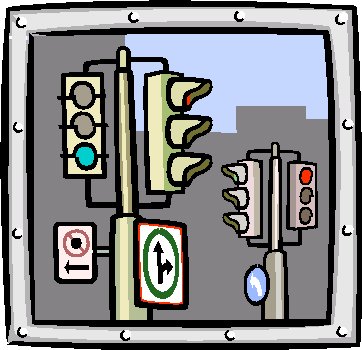
Many years later, I came across a note about differing national psychologies. We were discussing the optimal timing of the red phase on traffic lights at a junction such as a cross roads. In heavy traffic, the throughput is maximised by having very long phases. The constraint is psychological; if the lights do not turn from red to green, those waiting at the red light start to become impatient. My informant suggested that two minutes was the limit in the UK, nearly three in the USA, and in Japan, the patient Japanese motorist only started to fret after four minutes. I'd be interested in knowing the basis for this.
O.R. in developing countries
Following on from the comments about Eritrea, my mind wandered to ask which countries have not been linked to a published O.R. paper.
According to the Traveler's Century Club there are 319 countries in the world (I'm not a member as you have to have visited one hundred or more from their list, and my tally is about sixty). The United Nations has 192 members. The International Federation of Operational Research Societies (IFORS) has "over forty five" members (it was 48 when the roll was called at the last IFORS conference, but there are a few national societies whose current existence is uncertain. So we can reckon that there is work on O.R. in those countries.
But which countries are missing?
My quick check found no O.R. papers from:
Burundi
Chad
Djibouti
Swaziland
Bhutan
Burma (Myanmar)
Kazakhstan
Laos
North Korea
Uzbekistan
from my knowledge of Africa and Asia. I would be interested if anyone can correct this list. I need to look at South America.
(My "rules" are that a paper should be about an application in the country, or which has been developed with enough data from the country to claim relevance. The "rules" do not say that the work should have been implemented.)
According to the Traveler's Century Club there are 319 countries in the world (I'm not a member as you have to have visited one hundred or more from their list, and my tally is about sixty). The United Nations has 192 members. The International Federation of Operational Research Societies (IFORS) has "over forty five" members (it was 48 when the roll was called at the last IFORS conference, but there are a few national societies whose current existence is uncertain. So we can reckon that there is work on O.R. in those countries.
But which countries are missing?
My quick check found no O.R. papers from:
Burundi
Chad
Djibouti
Swaziland
Bhutan
Burma (Myanmar)
Kazakhstan
Laos
North Korea
Uzbekistan
from my knowledge of Africa and Asia. I would be interested if anyone can correct this list. I need to look at South America.
(My "rules" are that a paper should be about an application in the country, or which has been developed with enough data from the country to claim relevance. The "rules" do not say that the work should have been implemented.)
Subscribe to:
Posts (Atom)